What Size Greenhouse Do I Need? A Practical Sizing Guide
By The Rhino Growing Team— Greenhouse specialists, Norfolk ·
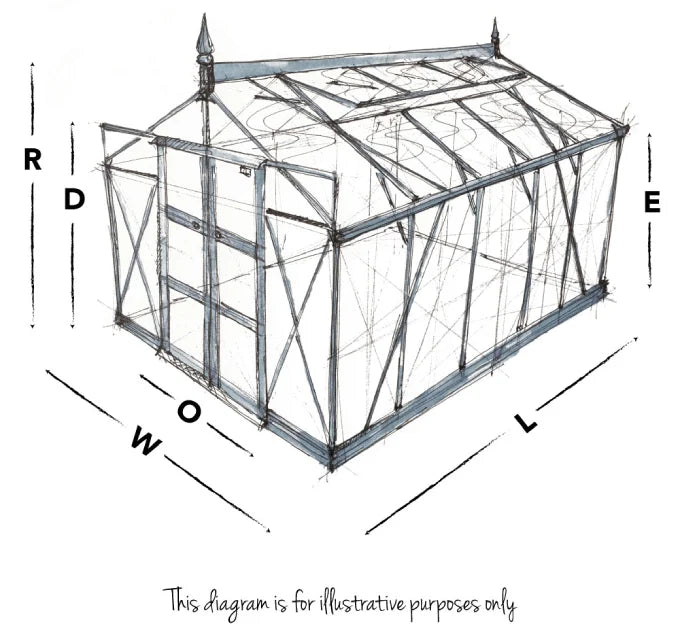
Ask anyone who has owned a greenhouse for more than a season what they would change, and you will hear the same answer: “I’d have bought a bigger one.” This guide helps you get the size right the first time.
The one rule that matters
Buy one size larger than you currently think you need. Seed trays in spring, tomatoes in summer, tender plants overwintering — a greenhouse fills in its first year. Moving up one length (say 6ft x 8ft to 6ft x 10ft) typically adds 10–15% to the price but 25% to the growing area.
Width decides how you work
| Width | Layout | Best for |
|---|---|---|
| 6ft | Staging one side, walkway beside it | First greenhouse, smaller gardens |
| 8ft | Staging both sides, central walkway | Committed kitchen gardeners |
| 10ft | Staging both sides + potting bench at gable | Allotment-scale growing, plant collections |
Length then sets your capacity: each extra 2ft of length on a 6ft wide greenhouse adds roughly 1.2m² of growing space.
Measure your plot properly
- Leave at least 60cm clearance on all sides for cleaning and glazing access.
- Check for overhanging branches — falling limbs are the most common cause of glass damage.
- Orient the ridge east–west if you can; it maximises low winter light.
- Confirm a level area: a slope of more than 5cm across the footprint means groundworks first.
What about height?
Standard eaves (around 4ft 7in) are fine if your staging sits at bench height. If you grow cordon tomatoes, cucumbers or want hanging baskets, high-eave models like the Rhino Premium earn their keep — full headroom right to the edge of the staging.
Quick recommendations
- First greenhouse, typical garden: Classic 6ft x 8ft
- Family kitchen garden: Premium 8ft x 10ft
- Exposed or coastal site, any size: the Ultimate range
- No lawn, just a patio: the Patio Lean-To
Still unsure? Request our free brochure — it includes a printable footprint template for every model — or call the factory and talk it through with someone who builds these for a living.